Chapter XVII
The Tower of Babel Rebuilt
by Bob Ogier
We learned how to build higher. We forgot how to speak to one another.
A tower built on pride may rise quickly, but it can never stand forever.
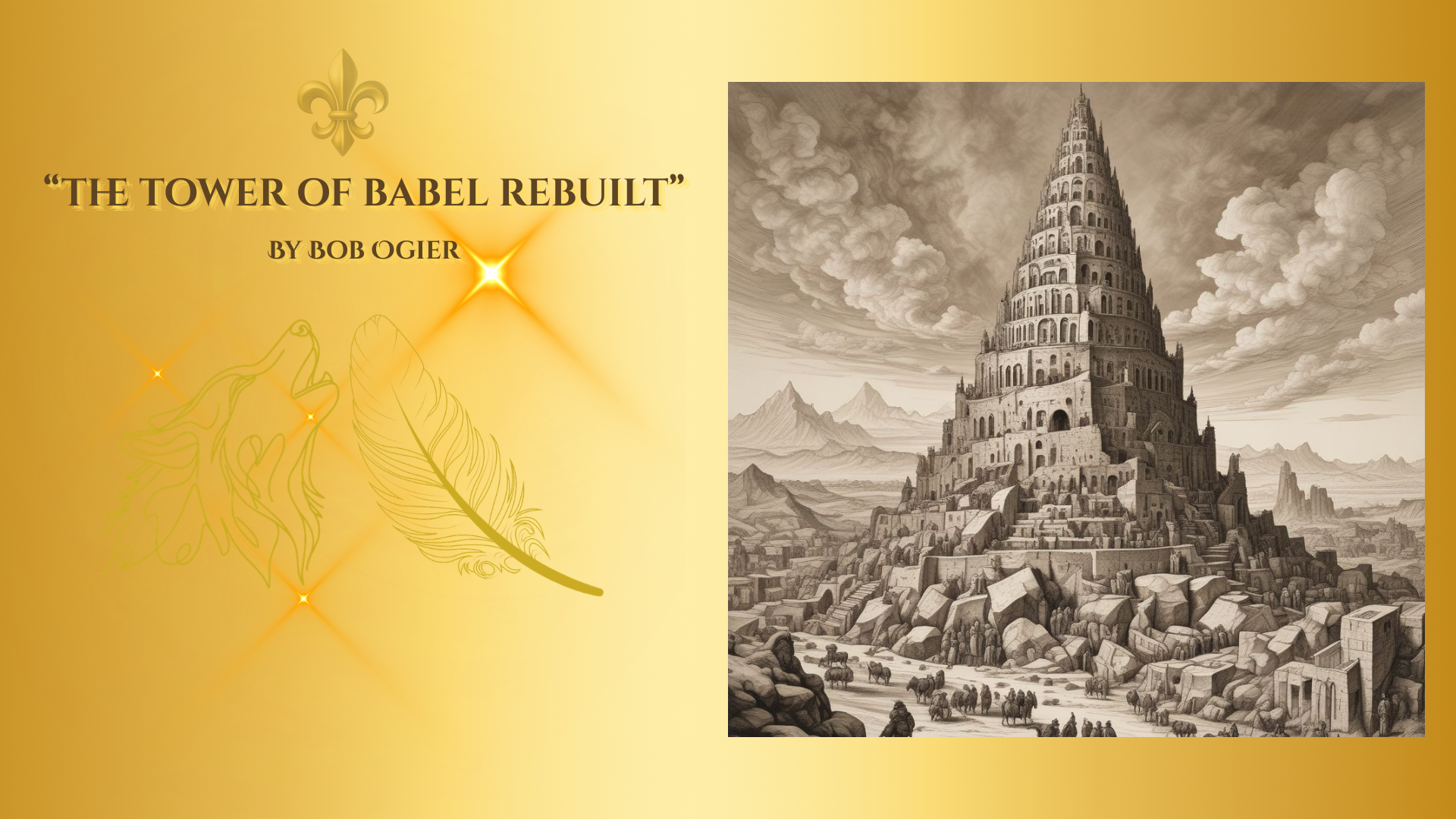
The timeless account of Babel has easily survived for thousands of years because it speaks directly to a permanent vulnerability within human nature. People inherently desire greatness, and there is nothing fundamentally wrong with grand ambition. The danger arrives when that ambition becomes entirely severed from basic humility. The ancient builders of Babel were entirely united in their physical purpose, yet deeply divided in their underlying spirit. Their goal was sheer elevation; their foundation was pride.
The core tragedy was never that they built too high toward the heavens. The tragedy was that they forgot completely why they were building in the first place. This modern retraining explores a global landscape that possesses unprecedented knowledge, massive technology, and endless capability, yet consistently struggles to genuinely communicate, understand, and care for one another. The modern tower rises, the voices multiply across screens, but authentic understanding becomes increasingly rare.
Humanity has never been more structurally connected, yet many individuals have never felt more profoundly isolated. We can effortlessly speak across continents in a fraction of a second, access a bottomless ocean of raw information, and construct taller towers than any generation that walked the earth before us. Yet the oldest human challenge remains entirely unchanged: understanding one another.
The Tower of Babel Rebuilt asks an incredibly difficult question: What happens when our technical ability to build far exceeds our spiritual ability to listen? The ultimate answer isn't a sudden collapse caused by outward weakness—it is a slow, structural collapse born of deep internal division. A tower can survive the strongest physical storms, but it can never survive a broken foundation. And pride has always been the weakest, most brittle foundation of all.
The underlying lesson of Babel was never a story about architecture. It was a story about the human heart. People often falsely believe that division begins the moment we disagree. In truth, division begins the second we stop listening to one another. The tallest tower in the world cannot bridge the distance between people who refuse to understand. But a single act of humility can. The future does not belong to those who build the highest; it belongs to those who learn how to build together.
Track 17 — The Tower of Babel Rebuilt