Chapter XXXII
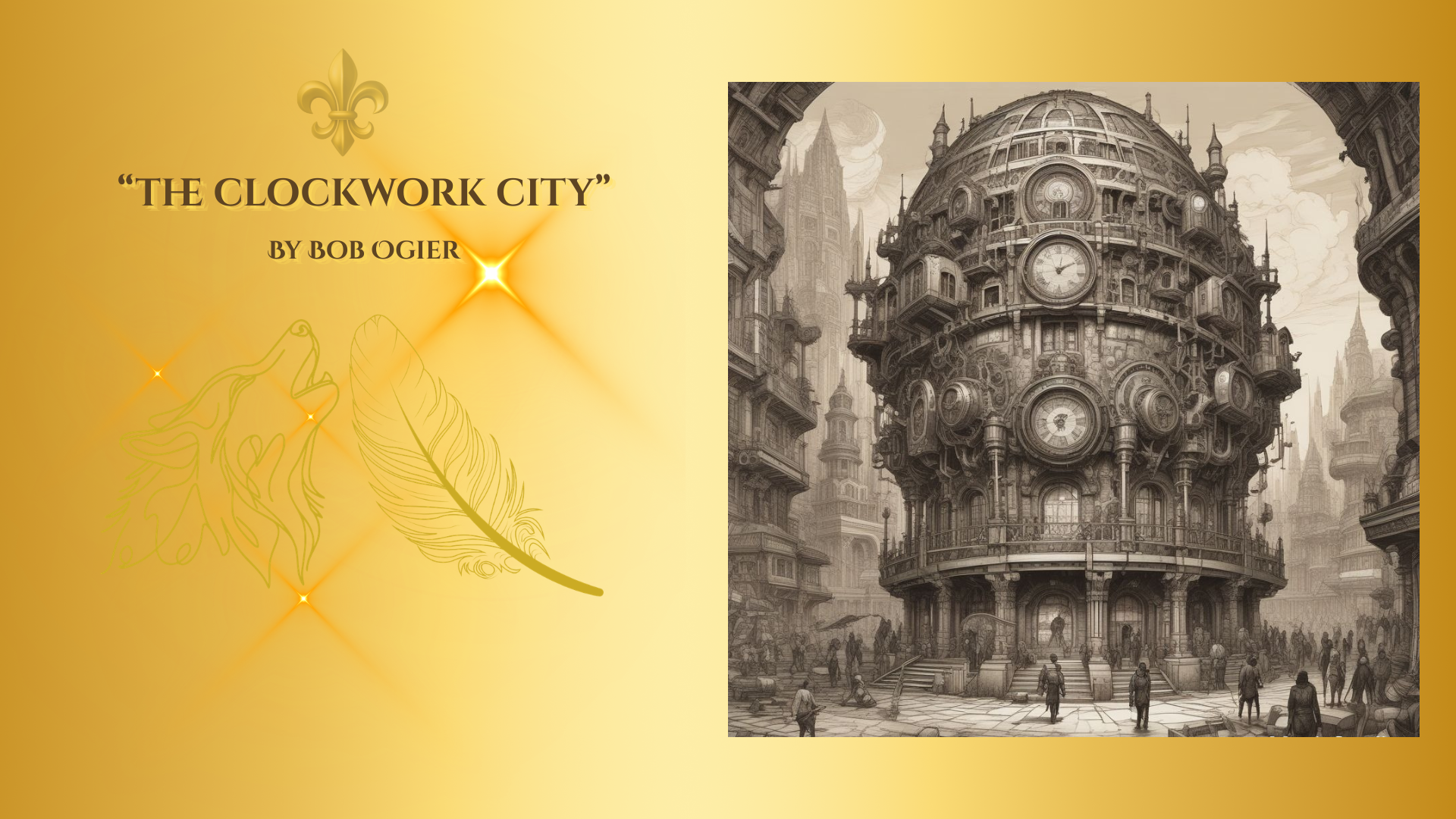
The Clockwork City
by Bob Ogier
The city ran perfectly. The people did not.
A perfect machine can run forever and never truly live.
Every single generation consistently builds elaborate socio-technical systems explicitly designed to make human life faster, easier, and more predictable—schedules, bureaucratic institutions, standardized processes, advanced technology, and restrictive rules. None of these structural elements are inherently evil in their nature. The true operational danger manifests when the machine itself becomes significantly more important than the actual living people it was originally constructed to serve. The Clockwork City dives deep into this specific, creeping hazard. The citizens within the story are not physically imprisoned behind iron walls or forced under brutal whips; rather, they are entirely comfortable, entirely predictable, and entirely safe.
And that absolute comfort is precisely why the mechanical city is so incredibly dangerous. Nobody notices that they have completely stopped dreaming across the years; nobody notices that they have ceased experiencing authentic wonder; nobody notices that they have slowly and silently traded their cosmic human freedom for comfortable daily routine. The cracked gear becomes the absolute hero of this narrative arc precisely because it is flawed. Its mechanical imperfection transforms into its greatest gift to the system, and its sudden structural disruption becomes its defining life purpose. The track ultimately argues that humanity survives and thrives through our beautiful imperfections—through art, creativity, emotion, and through the brave people willing to step out of the assembly line to remember what everyone else has forgotten.
Modern life aggressively and consistently rewards standard efficiency. We publicly celebrate speed, endless productivity, clinical precision, and absolute algorithmic optimization. Yet, the deep, ancient things that make a human life genuinely meaningful rarely fit neatly into those cold industrial categories: music, love, authentic friendship, raw creativity, childlike wonder, and sweeping imagination. These are not efficient things; they are beautifully messy, inefficient human things.
The cracked gear in this story stands as an unyielding reminder that our internal flaws and imperfections are not always problems that require fixing by a mechanic. Sometimes, they are sacred invitations to shake ourselves awake. The ruling city views the crack as a systemic fault that threatens order, but the song views it as an act of absolute freedom. Because it is the broken rhythm of the gear that finally allows a magnificent new melody to begin playing across the concrete square.
The Clockwork City explicitly teaches that a life is never meant to be measured solely by the metrics of economic output and productivity. The city works flawlessly on paper, yet something completely essential to the soul is missing from the equation—its citizens have forgotten how to feel. The cracked gear reminds them of their roots through one small act of courage, one voice speaking completely honestly, and one person daring to be fundamentally different. That is often more than enough to change an entire world. Every major movement begins with a single spark, and every spiritual awakening begins when one person dares to ask the most dangerous question: "What if there is more?" The city fears that question; the human spirit completely depends upon it.
Track 32 — The Clockwork City