Chapter XXIV
The Prison of Mirrors
by Bob Ogier
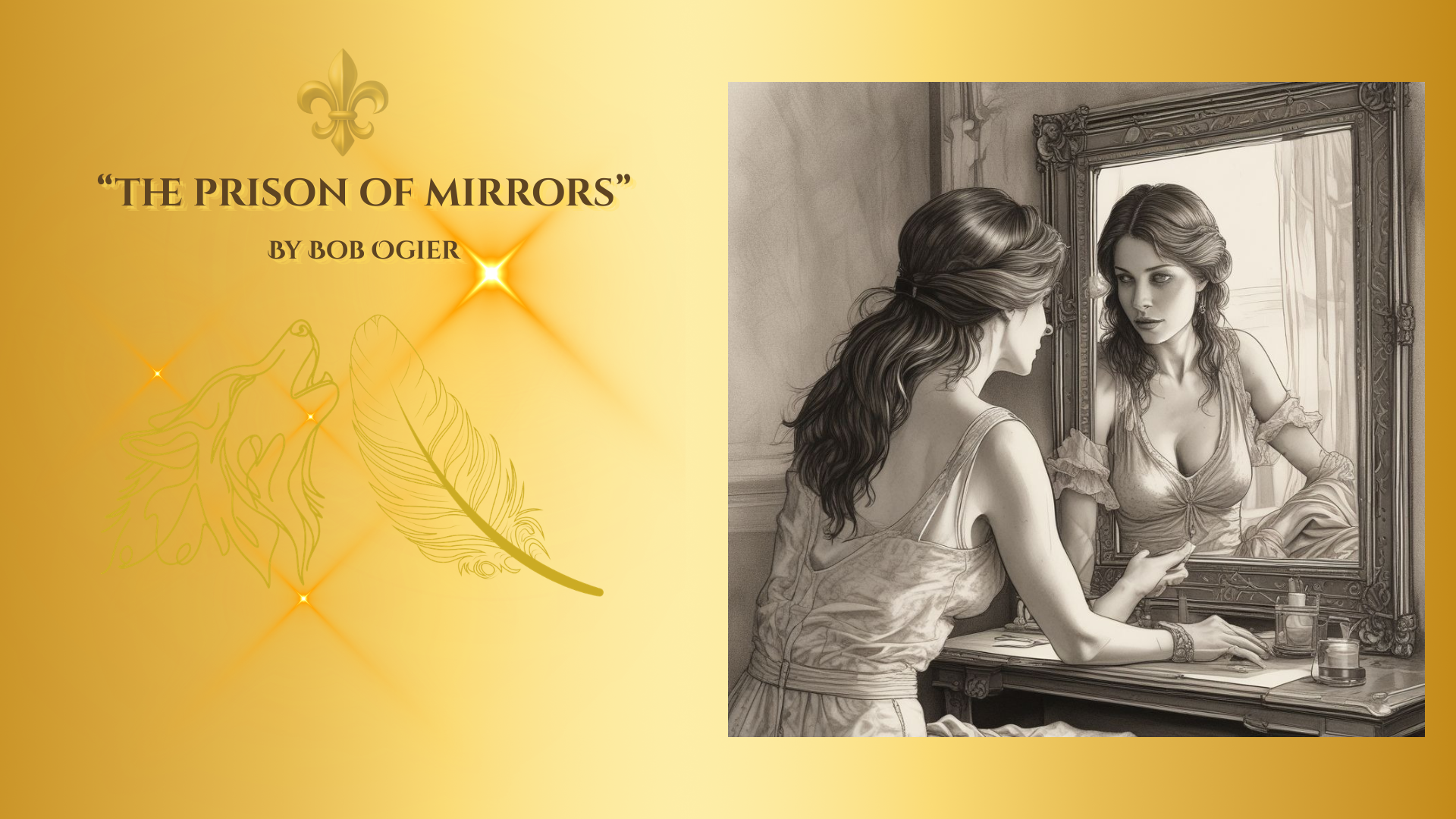
The most difficult prison to escape is the one built from your own reflection.
When we only look for reflections that comfort us, we eventually lose sight of who we truly are.
Most structural prisons are remarkably easy to recognize. They possess heavy stone walls, iron locks, steel bars, and definitive, visible boundaries. The prison highlighted in this song is far more dangerous because it appears entirely beautiful on the surface. Every mirror lining the chamber offers constant reassurance; every single reflection appears deeply familiar; and every image tells the prisoner exactly what he desperately wants to hear. Yet tragically, none of them reveal actual reality.
The track aggressively explores the common human tendency to design comfortable, protective versions of ourselves—versions that smoothly avoid responsibility, hide our deepest weaknesses, and shelter us from uncomfortable truths. Over time, those curated reflections grow far more convincing than reality itself. The core tragedy of the story is that the prisoner is not actually trapped by the glass or the structure; he is trapped entirely by his desperate psychological need to believe them.
A mirror possesses one singular, clean purpose: to show us exactly what is standing in front of it. But a damaged, distorted mirror cannot perform that task. It twists, bends, magnifies, and hides the truth. The Prison of Mirrors imagines a human life surrounded entirely by these deceptive silver surfaces. Every answer simply leads the traveler into another reflection, and every vital question returns completely unanswered. The prisoner searches desperately for a physical doorway out of the room, yet it can never be found because he continues looking into the mirrors rather than peering beyond them.
This serves as the foundational lesson of the track: truth is never discovered through endless, vain self-admiration, nor is it found through endless, destructive self-condemnation. Truth is finally discovered only when we stop worshipping the glass reflection and actively begin seeking reality. The exact moment the glass breaks, true freedom begins.
The most frightening element of this allegory is how easily we cross the threshold into this captivity. It starts with one small illusion, a simple excuse, a flattering bit of feedback, or a highly comfortable lie. Eventually, the mirrors multiply exponentially. Before we realize it, we are surrounded by versions of ourselves that are far easier to love than the raw truth. Yet none of those ghosts can guide us forward across the terrain; none of them can unlock the heavy door. Only truth possesses that power, and truth often arrives with the violent, shocking sound of breaking glass. Therefore, the conclusion of the song is not a tragedy—it is total, triumphant liberation. The mirrors shatter, the illusions vanish, and for the first time, the traveler hears his own genuine voice echoing clearly in the quiet.
Track 24 — The Prison of Mirrors